
An interesting article about the various stigmas of cancer and their implications:
Cancer stigma: Don’t blame patients for their disease, no matter what the risk factors.
Which leads me to question, what are the stigmas of childhood cancer?
An interesting article about the various stigmas of cancer and their implications:
Cancer stigma: Don’t blame patients for their disease, no matter what the risk factors.
Which leads me to question, what are the stigmas of childhood cancer?
The people who I met, the conversations that we had, the ideas and passions that were exchanged and explored. These are the aspects that I enjoyed most at the Third Annual WMU Medical Humanities Conference, the things that I was most looking forward to and that I hope to experience at more conferences in the future.
I have to say, I think that this was one of my best presentations about my research. I’ve realized that I perform best as a speaker when I speak freely. The presentations that preceded mine throughout the day were inspiring. I felt my passion for my research empower me, and I was able to overcome anxiety with enthusiasm about my findings. The response to my presentation was overwhelmingly supportive and encouraging; some scholars were eager to share my project with students, others inviting me to stay in touch and explore their graduate programs. As the only student presenting, it was truly an honor to participate and I was fortunate to have such a great, interactive audience.
The entire conference was an adventure. From the woman who sat next to me on the shuttle bus to the Founding Dean of Western Michigan University’s Medical School, I had the opportunity to meet a variety of people. People had travelled from across the nation and as far as England to present and participate in this conference, to share the projects they were passionate about and to learn about the passions of others. With this interdisciplinary field, there was an interesting assortment of people: humanities and social science scholars, clinicians, educators, and many overlaps amongst these. Each presentation offered new insight about different facets of Medical Humanities, and the discussions that unravelled afterwards were equally engaging and thought-provoking. Being physically in the presence of Medical Humanities people helped me to better understand this field, and I’ll be incorporating some of my new thoughts from the conference in blog posts to come.
Here’s my WMU Medical Humanities Presentation: I wrote out notes in preparation, but they were by no means memorized. For those who would like to share my research with other students, I am honored. I really appreciate the support and enthusiasm!
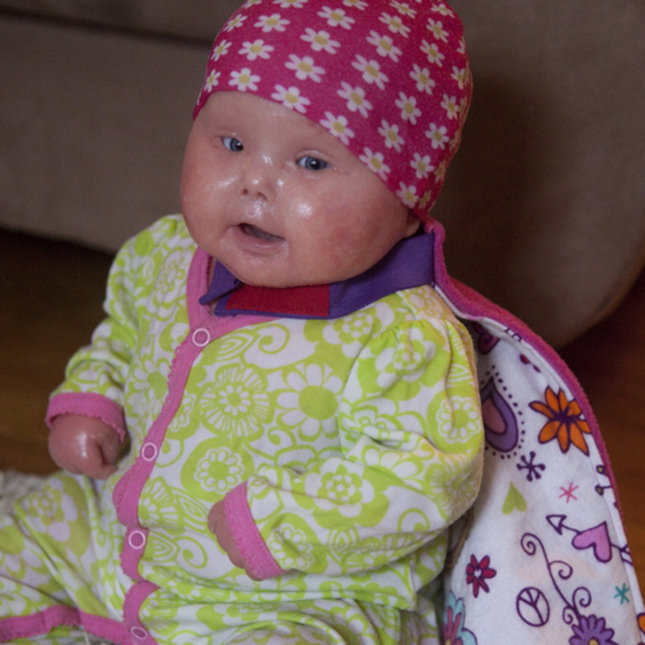
Robyn Rosenberger & TinySuperheroes
Bam! Pow! Kaboom!
What began as a birthday gift for a nephew has quickly become a gift for all the superhero children around the world. It started with Superhero Brenna, whose diagnosis with a rare skin disorder gave her the superpower of endurance, of “redefin[ing] beautiful” and blessing those around her. Kids like Brenna who face serious disabilities or illnesses display superhero qualities every day. The boldness to be, the bravery to endure. These are kids who deserve to be appreciated, whose effort and persistence amidst hard times should not go unrecognized.
Tiny Superheroes gives children capes to empower them through their journeys with disability or illness. These capes are handmade in vibrant colors with letters personalized for each child. They materialize our appreciation for these children, these tiny superheroes all around us. This organization honors these children not merely through material capes but also by showcasing their journeys through blog posts “in hopes of giving them a voice, their illness or disability a face, and the world the opportunity to stretch.”

Robyn Rosenberger & TinySuperheroes
In addition to sharing her story through the book Grace, Melinda Marchiano gave voice to her experiences through a language of her own: dance. Through the Fire embodies her illness experience with childhood cancer.
A beautiful, moving performance.
C.S. Mott Children’s Hospital has a campaign for childhood cancer awareness month: Block Out Cancer. Block Out Cancer is “a rallying cry for people from all walks of life to come together to support the fight against children’s cancers.”
I’m honored that Mott has featured this blog post I wrote about my project:
My name is Trisha, and I help children tell their stories to Block Out Cancer.

“The humanistic dimensions of medicine and health.”
This is the phrase that first intrigued me about the Third Annual Western Michigan University Medical Humanities Conference‘s Call for Abstracts. I am excited to have the opportunity to present about my thesis research, Chronicling Childhood Cancer: Illuminating the Illness Experience, at this conference one week from today.
This is my first conference to attend and present at, and the uncertainty of what to expect is thrilling. The innovative field of Medical Humanities is so interdisciplinary; who will I meet and how should I tailor my presentation accordingly to this diverse audience? What insight can I bring from my experiences in the field, and what do I hope to learn from others? How can I make the most of this incredible opportunity?
With funding from the University of Michigan Department of English, it is an honor to be able to attend, engage, and contribute to this conference.
Melinda Marchiano and I share a number of similarities. We are writers who come to understand the world and our own experiences through language. We are dancers who have unearthed a passion that we will pursue for the rest of our lives. We are aspiring pediatric oncologists, eager and excited to pursue medical careers. But unlike Melinda, I’ve only encountered cancer from “the outside of the needles and sickness” (Greer 52).
 I met Marchiano by reading her memoir, Grace: A Child’s Intimate Journey through Cancer and Recovery. Marchiano writes her story in journal entries of sorts with interspersed snapshots of milestone memories and powerful quotes. She reflects deeply on her cancer experiences, sharing her thoughts on the diagnostic label of cancer, the paradoxical effects of chemotherapy, and the tensions of mind and body through illness. Her conversational and confessional writing reveals her sense of humor and personality.
Marchiano’s comprehensive memoir seems to capture the essence and nuances of her experience with childhood cancer. Rather than attempt to summarize these, here are just some of many excerpts that were particularly compelling to me:
“[Chemotherapy’s] a sort of ‘chemical feeling,’ like battery acid that races through your veins. I felt terrible, and as I write this now, recalling how sick I was, nausea and dizziness have returned to me. I only now noticed that, feeling so passionate about my writing, I am virtually reexperiencing it. Chemo may eventually leave your body, but it always stays with you” (50).
“I longed for the feeling of dancing, the feeling of freedom, the feeling of the studio air filling my lungs, and the feeling of my heart beating as one with the music. I decided I would work hard. I would do it…I would dance again. The fear of hard work did not exist within me. Becoming accustomed to pain, I now didn’t care one bit how badly anything hurt” (119).
“I noticed that, hey, maybe I did have a story. But if, indeed, I did, I didn’t really think that anyone would want to hear it” (140).
“When I wrote my speech, I questioned how much I should share. Pondering it for quite some time, I decided to lay it all on the line, to give it to them straight. Cancer does exist. My suffering was real, and I needed to acknowledge that” (224).
“Cancer kids need just as much help after treatment as during. We’re like giant walking wounds, with each touch stinging and painful. Only time can make the wound scab over and begin to heal. But during that vulnerable time, we need a Band-aid” (272).
Marchiano now advocates strongly for childhood cancer research. In sharing her story, she has found that “my cancer had a meaning– a purpose. It was doing what I thought it was not capable of doing — giving” (196).
“Cancer was everywhere. There was no moment, thought, idea, ache or pain, burst of energy or breathless moment that didn’t change, or wasn’t changed by my cancer– there was always a piece of it with me, somewhere, in something.” (67)
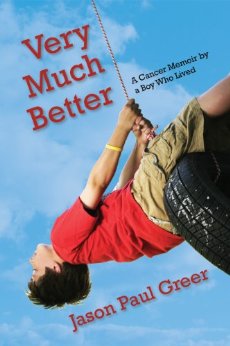 Jason Greer’s memoir Very Much Better holds within it a piece of his cancer. Diagnosed with Ewing’s sarcoma on the brink of adolescence, Greer leaves behind his hometown in Montana for the Children’s Hospital in Seattle, Washington. But he finds strength in support from his loved ones, family and friends . For Greer, “faith…is the crying from inside the soul to plunge into living”; his beliefs energize him throughout his journey (117).
Greer smoothly melds his retroactive retelling of the past with “a look back” from his present point of view. We become familiar with Greer as an 11-year old boy and as a grown-up adult, the during and the after of cancer, and we witness how the disease matures him hastily. He intersperses medical terms such as “pre-op” or “outpatient,” denoting their foreign nature by quotation marks (10;14). With witty chapter titles like “The Art of Throwing Up” and “The Cancer Patient’s Guide to Duct Tape,” personality and a sense of humor shine through each adventure (xi).
What struck me most about Greer’s memoir was his powerful grasp of his experiences. Particularly eloquent was his ability to capture one of the most emotional aspects of coping with childhood cancer: losing others to the disease. The deaths of Erik, Chad, and Jesse are each heart-wrenching in their own right, and Greer illuminates their important place within his own cancer experiences.
“Cancer threatened each of us, for a time was inescapable, and seemed to be everywhere. But as we sat in the company of each other’s encouragement, we surrounded the disease — and we defied it, every part of it” (83).
“She is simple. She is our Elena” (x). A grown-up, 5-year-old girl who loved hearts, dresses, and the color pink. Her life was colored by her experiences with DIPG, a rare form of brain cancer.
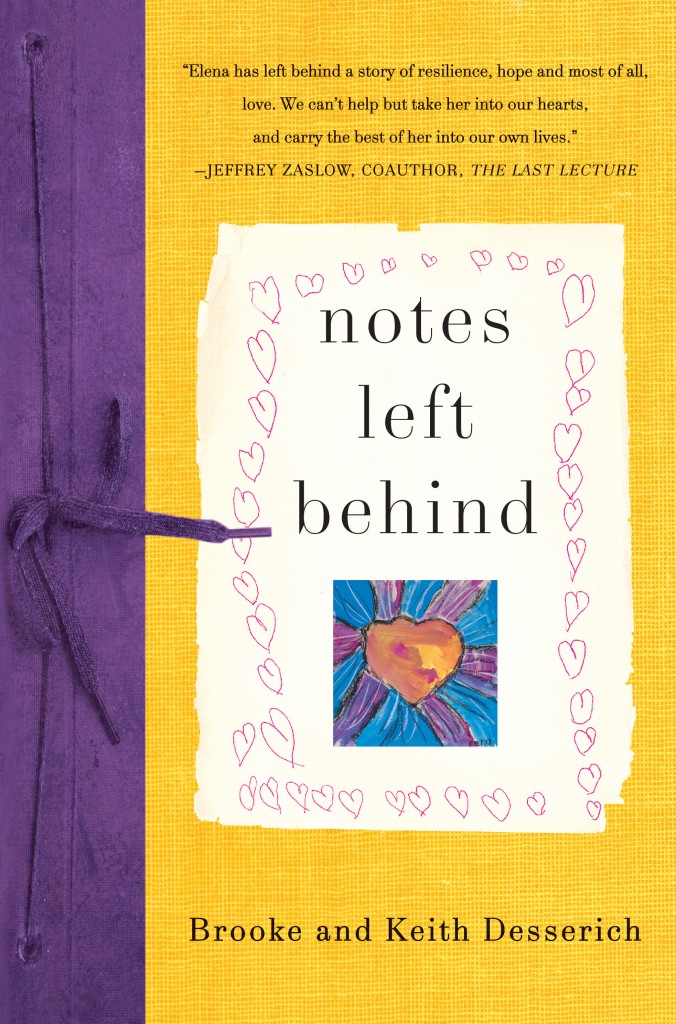 Notes Left Behind is a collection of journal entries written by Elena’s parents, Brooke and Keith Desserich. What began as a preservation of memories to share with Elena’s sister Gracie quickly became more meaningful to both the Desseriches and all those who cared about Elena.
The Desseriches chronicle their letters by the date and the number of days since diagnosis, the day Elena was given an estimate of 135 days to live. Brooke and Keith take turns writing entries that coalesce to provide a more holistic, parental view of caring for a child with cancer and her sibling.
While Elena wrote many notes to her loved ones, “this book too is a note from Elena, messages from a little girl who taught our family so much about life” (xiv). Elena’s sweet, sincere personality shines through the eyes of her parents, who share with us her experiences in losing her voice, gaining weight from steroids, and wanting nothing more than to be normal once more.
In the face of cancer, questions emerge about the daunting uncertainties and the forgotten nuances. Keith grapples with these question marks and calls out our band-aids, noting that “cures don’t come on toy shelves and they don’t have tags” (64). He reminds us that these material objects are powerful yet insufficient when lives are still at stake. It’s refreshing to remember that at the root of each childhood cancer is a need for a cure.
Inspired by their personal experiences with the incurable, the Desseriches started the organization The Cure Starts Now. With an emphasis on finding a cure for brain cancer, this organization believes that a cure for all cancers can be found in this elusive disease. Elena has touched the lives of those around her and more.
She has left behind more than notes.
Godzilla stands next to a purple hospital, breathing out engulfing flames of fire. He is burning out cancer.
This drawing was one of many to inspire art therapist Lisa Murray to share the work of children with cancer. Photographer Billy Howard is also dedicated to these children, capturing their personalities through a camera lens. Together, Murray and Howard set out to bridge their representations of these children. Murray let children illustrate what it feels like to have cancer through the medium of their choice, then wrote out their explanations. Howard photographed each child individually, honoring their personal journeys with cancer.
 Godzilla vs. Cancer was an art gallery exhibition in 1994, sharing the illustrations, explanations, and photographs of 25 children with a larger audience outside the Pediatric Oncology ward. Eight years later in 2002, 17 of the children had survived. These creations along with biographies and a list of resources were compiled to create the book Angels & Monsters: A child’s eye view of cancer.
Cancer brings out fear: tears, pain, sickness, confusion, isolation, and band-aids. But it also brings out friendships, faith, perspective, and love. While each artistic piece offers insight into each child’s perspective, black and white photographs showcase each child’s self. On a swing, with a superhero cape, by a window, curled in a bed. Each work of art and the rationale behind it is compelling, each photograph and each child beautiful.
The authors reflect honestly with simple yet profound understandings of these children and their journeys. I loved the phrase that Jeff Foxworthy uses in the forward to describe these children: “old souls in little bodies” (viii). These individuals exhibit the precision of language as they carve out childhood cancer. They invite us to into “a special world. No artifice exists there. The human spirit holds sway with complete honesty and great dignity” (6).


 Investigating Illness Narratives