Week 7: Guest Speaker- Dr. Janet R. Gilsdorf

This week, we had the pleasure of welcoming Dr. Janet R. Gilsdorf to join our class discussion. Dr. Gilsdorf is a pediatric infectious disease doctor at the University of Michigan. She is  a breast cancer survivor. She is a writer, an author of two books: Inside/Outside: A Physician’s Journey with Breast Cancer (Conversations in Medicine and Society) and Ten Days. And she took the time to speak with the students in my class.

Having a guest speaker created a different dynamic for our class discussion, one that I think made some of the concepts we had discussed more real. Conversation ranged from Dr. Gilsdorf’s experiences and role in medicine to her time as a patient to her passion for reading and writing. It was a privilege for us to have the opportunity to speak with her.

Lesson Plan Week 7

Leave a comment

Filed under Grand Rounds

“The Heart of Medicine”: Published in The Intima, A Journal of Narrative Medicine

This month, my artwork I Will Wear My Heart Upon My Sleeve was published on the front page of The Intima: A Journal of Narrative Medicine! Check it out here:

The Intima, I Will Wear My Heart Upon My Sleeve

2 Comments

Filed under Miscellaneous Musings, Narrative Medicine Research, Uncategorized

Week 6: Meeting Cancer, the “Emperor of All Maladies”

With a day full of rain, hail, and even thunder-snow, we elected to spend classtime watching the film adaptation of Margaret Edson’s play W;t. We decided to save our discussion of Audre Lorde, Angelina Jolie, and breast cancer for the following week, where guest speaker Dr. Janet Gilsdorf was coming in to speak about her experiences as a physician and as a breast cancer patient. I had been worried about how to show excerpts of W;t and do the film justice (I think it’s an incredibly powerful work), so I was happy to be able to show it to them in its entirety.

Lesson Plan Week 6

Leave a comment

Filed under Grand Rounds

Week 5: Embracing Illness- (Dis)Ability in the Blogosphere

Learning about autism in an English class was one of my early experiences with the intersection of literature and medicine. This week, it was especially challenging to condense a semester’s worth of studying autism and disability studies into a 1.5 hour class period. Nevertheless, I do think that it was one of the most enlightening class discussions thus far.

There seemed to be something different about our discussion this week. Autism seemed much more relatable, and more students evoked personal experiences with autistic relatives and friends. A number of students expressed feeling that there was much more to explore about autism, and they have decided to delve deeper into autism for their final projects (which I will discuss more in a future post).

This week, I was also observed by an advisor from the Honors College. I told my students that my goal was to get her to participate in our discussion, and I’m happy to say  that we were successful! The class was very engaged; there were a number of moments where multiple students had their hands up, eager to participate.

When class was over, I left the room with a refreshed appreciation for this teaching opportunity. Each of the students (and my advisor) left with a new perspective on autism. In a world where everyone is touched by disability and/or illness in some way, I continue to believe that this kind of awareness is absolutely essential.

Lesson Plan Week 5

Leave a comment

Filed under Grand Rounds

Week 4: A Literal Lock-In- The Body’s Entrapment of the Mind

To mark the halfway point of my mini-course, I gave the students the opportunity to provide feedback. In particular, I was curious about what they were enjoying in the course and what changes they would like to see made in the time we had remaining. Were the readings too long or too short? Did they find class discussions to be productive and thought-provoking? Was the class meeting their hopes and expectations and, if not, were there constructive ways that it could be improved?

I was pleasantly surprised to receive overwhelmingly positive feedback. Students seemed to be content with the structure of the course- the readings were manageable,  blog post assignments straightforward, class discussions  stimulating. Many found the blog posts to be a great way to kickstart our class discussions and to get them thinking about the readings. A number of students expressed their appreciation for the multiple media we explored and particularly enjoyed watching film and video clips in class.

The only concern that was voiced by one or two students was that there was unequal participation in class discussions. As with any discussion class, I’ve observed that some individuals participate more than others, but I have also been content with the fact that each individual contributes to each class session. To some extent, disparity in engagement may be inevitable, but I’m hoping to incorporate even more small group activities and more consciously make  an effort to get everyone talking.

Lesson Plan Week 4

Leave a comment

Filed under Grand Rounds

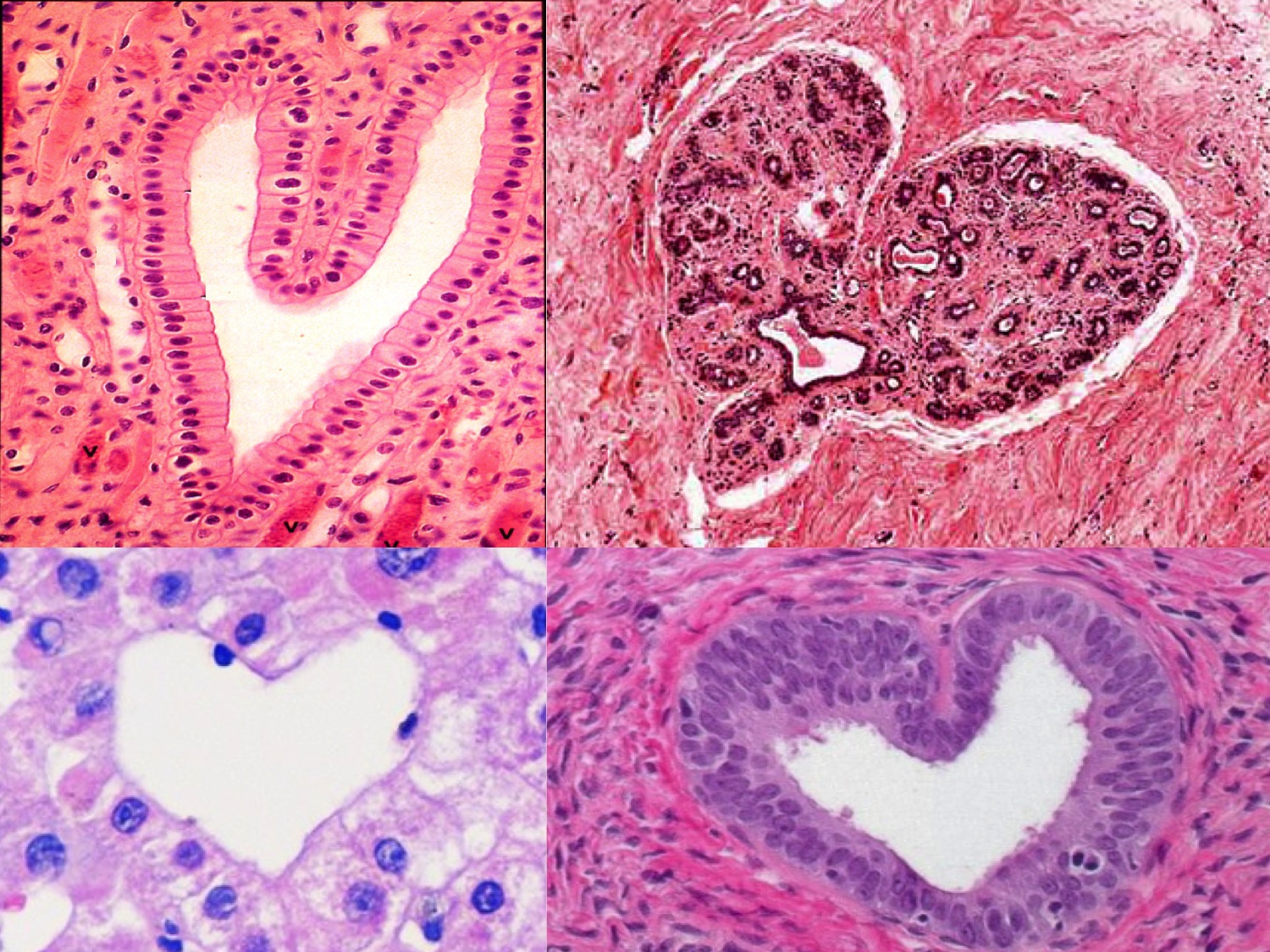
I will wear my heart upon my sleeve

I will wear my heart upon my sleeve

The heart has long been appreciated as a vital organ in the body, one whose persistent beating sustains human life. During the Middle Ages, the heart fell under the scrutiny of a variety of philosophers. Some, like Aristotle, reasoned that the heart, not the brain, was the important organ of the body that dictates human reasoning and rationality. Others believed the heart held different responsibilities as the seat of the soul, a place of emotion and passion.

The heart as a representation of love has survived especially through the heart shape, a symbol that has been prominent since the end of the Middle Ages. The simple heart shape has become a metaphor for affection, for lust, for devotion. As the image primarily associated with Valentine’s Day, it remains powerfully resonant of love.

In Othello, Shakespeare alludes to the importance of expressing such emotion with the phrase “I will wear my heart upon my sleeve.” The phrase once referred to the jousting tradition where knights wore colors that matched their respective ladies. Now, this idiom alludes to displaying emotions openly and fearlessly.

This collage, motivated by the recurring appearance of the heart shape in non-cardiac tissue, demonstrates how the heart shape we so commonly associate with love can in fact exist outside the organ of the heart. Taken from kidney, mammary gland, liver, and prostate gland tissue, these samples demonstrate how the heart shape lives on structurally in other bodily organs. These hearts are constructed with different kinds of epithelial tissue from simple cuboidal epithelium to simple squamous epithelium; different cells come to naturally construct the heart shape. The array of colors arose from the different dyes used to illustrate the tissue structures. The basic dye hematoxylin binds to basophilic components like nucleic acids and ribosomes, while the acidic dye eosin binds to acidic components like protein. Although the heart shape is embodied differently in these various organs, it maintains the basic structure of two symmetrical halves that coalescence to create a whole.

Passion and love are not isolated within the cardiac tissue of the heart. Instead, these emotions circulate throughout the entire body. We must embrace these naturally permeating feelings, and so, “I will wear my heart upon my sleeve.”

I was honored to be selected as the Grand Prize Winner of the Science as Art Contest for this artwork and description.

This content is licensed under a Creative Commons: Attribution-NonCommercial-ShareAlike license (CC:BY-NC-SA).

1 Comment

Filed under Miscellaneous Musings, Visualizing Illness

Autistic Strengths and Stereotypes, My First Publication

Two years after its conception, I have officially published a piece of my writing. After being lost in transition and undergoing a series of  revisions, my review about literature for children with autism, Autistic Strengths and Stereotypes, has been published in Disability Studies Quarterly.

It’s been exciting for me to go through the publication process, to take an ordinary paper that I wrote for an independent study and turn it into something more. From corresponding with editors to revising and proofreading, I’ve enjoyed learning about the inner workings of the publication process. It’s an honor to be included as an author in one of my favorite journals.

Check it out! I’d love to hear your thoughts about my review:

Autistic Strengths and Stereotypes | Paul | Disability Studies Quarterly.

Leave a comment

Filed under Literary Narratives, Narrative Medicine Research

Week 3: Living Beneath the Bell Jar of Depression

As our discussion about Sylvia Plath’s The Bell Jar and mental illness more broadly was beginning to wrap up, I asked the class if anyone had any last ideas or thoughts that they wanted to discuss pertaining to the novel. One student raised her hand and said that she just wanted to share a favorite line from the novel. We turned to the page and talked about it, and then I realized that there were a number of places in the text that these students just wanted to share. Our discussion continued as we marveled at Plath’s grasp of language.

Sometimes, I think, discussions can work better when they escape the confinements of preparation.

Lesson Plan Week 3

Powerpoint: Sylvia Plath’s The Bell Jar- Background

2 Comments

Filed under Grand Rounds

Week 2: Diagnosing Illness Narratives

It’s one thing to be sitting in a classroom discussion as a student– its something entirely different to be leading the discussion as an instructor. I’ve enjoyed teaching scientific facts and promoting inquiry-based learning in science, but it’s a new  experience for me to be leading discussions rooted in my literary interests.

It really makes a difference to have an enthusiastic group of students and a classroom where we can sit in a circle. I taught about the history of illness narratives, which I’m simultaneously writing about for my thesis. It was a strange experience to be crafting  leading questions by voice that I have also been trying to ask in my writing.

I think one of my teaching goals for the semester is to get better at tackling silences. There’s an art to teaching in silence, to allowing quiet to linger for just long enough for thought generation, without letting this surpass into daydreams and uncomfortable, awkward silences. I’m working on it.

It was a thought-provoking first discussion class, and I’m looking forward to keeping the conversations going. Up next: excerpts from Sylvia Plath’s The Bell Jar and her poems Lady Lazarus and Tulips.

Lesson Plan Week 2: Diagnosing Illness Narratives

Presentation: Illness Narratives — A Brief History

Worksheet: Diagnosing Illness Narrative with Frank’s Illness Narrative Types

Leave a comment

Filed under Grand Rounds

Grand Rounds Week 1: Introduction, Syllabus, and Welcome to Blogging

One week ago was the first day of my Honors 135 course, Grand Rounds: Exploring the Literary Symptoms of Illness through Narrative. It was exciting to start and to meet all my students, and I’m really looking forward to an interesting and enlightening semester.

I’ve been struggling to decide exactly how I would like to showcase my course and my thoughts about teaching on this blog. For the time being, I’ve decided to focus on my own instruction materials. I might discuss new ideas that arise in class, but to honor the sanctity of our classroom discussion, I might withhold these thoughts until the end of the semester and reflect on the course as a whole at that time.

And so, here are the openly licensed materials from our first day of class:

Honors 135 Syllabus

Lesson Plan Week 1

How to Create WordPress Blog

6 Comments

Filed under Grand Rounds